

What the Trees Already Know
On soil, humility, and our roots

Hello and welcome to,

✨Exploring the intersection of creativity, consciousness, and wander — documenting my journey as a creative seeking a soulful, intentional life.✨
It’s spring in Delhi. The roads are scattered with fallen leaves and flowers, as though the city has quietly turned into an urban forest. To some, it may look like litter, but to me, it is a beautiful kind of mess where the petals and leaves spill over roadsides, drifting across pathways, gathering in gardens, and settling gently on the roofs of parked cars beneath the trees. The city feels briefly softened, wrapped in a careless, seasonal abundance and a variety of hues.
I call this littering a beautiful mess! The messiness includes the Semal flower which starts blooming in the month of February and comes in full bloom through March where the city is painted with pops of red peeking through the tall Semal trees (Bombax ceiba). The flower is unusually big, with large stamens forking out like a tiny crown. Its fascinating to see how the blossoms sit on the branches, improbably yet comfortably balanced — only nature can achieve such precision. The Semal tree, though tall, towering to almost 20m in height, has an unusually scanty bark with the flowers only appearing on the crown of the tree, just at the height which makes it visible from a distance, and thus one can enjoy its beauty even while driving around the city. The beauty of Semal lies not only in its aesthetic-looking flower , but also in the fact that it appears merely for a month, but manages to change the entire landscape of the city — making it resemble to Japan’s cherry blossom.


Also, there is the underrated bottlebrush tree (Callistemon), which sits meekly in local parks, gardens, roadsides and even on traffic islands. It’s spiky flowers get its name from its shape which resembles a bottle brush cleaner or maybe the other way round where the design was inspired by nature itself. Its a graceful tree which is highly underrated given its flower’s peculiar shape.


Then of course joining the bandwagon is the Gulmohar tree (Delonix Regia). Although this one blooms in the month of April, it starts showing its presence in mid march in places — adding to the red quotient in the city (after Semal and bottle brush). Gulmohar tree to me is like poetry — delicate yet exquisite, vivid yet calm, imposing yet nurturing. Its presence brings in a sense of comfort with the soft feathered leaves, resembling the touch-me-not plant, which beautifully compliments its delicate, ornamental flower. Its surprising to see that this beautiful tree has its roots in remote parts of the island of Madagascar.


The Mess We Share
Recently I posted a note where I mentioned that —
This note holds many meanings and layers. It is an attempt to trace the quiet nuances of our messy lives, the contradictions and imperfections that gradually find their way into the larger systems of humanity. In doing so, they shape the culture we create and the world we eventually come to inhabit. From wars to global crises, the world around us appears clouded by despair, apathy, and a troubling loss of our shared sense of humanity.
Constantly we seek to —
extract and not give,
destroy but not build,
kill but not create,
harm but not heal,
regret but not remorse
This is in contrast to nature, who has constantly been forgiving, empathetic and nurturing. Its capacity to regenerate even after the trees stand bare, is a testimony that humanity is also capable of doing the same, only if we intend to do so.
But we are not as forgiving as nature!
We rarely wish to create from something as simple and generous as the soil beneath our feet. Instead, we fight to possess it, to mark it, to control it. In the process, we often end up spilling blood upon that very ground. The soil absorbs it quietly, as it absorbs everything else, and what sinks into it seems to rise again within us — seeping into our veins, turning into anger and division. Slowly, it spreads as a quiet hatred for those who were born of the very same soil as we were.
I wish we could learn from nature —
to forgive than hold grudge
to nurture than bleed
to empathize than demean
to caress than wound
to regenerate than plunder
Perhaps we could learn something from the Semal, the bottle brush, and the Gulmohar found in our backyards and neighborhoods. Each blooms in its own time and in its own way, yet all remain deeply rooted in the same soil. They remind us that life does not have to be complicated to be meaningful. We may reinvent ourselves many times over, but it helps to remember where our roots lie.
Much of my writing draws inspiration from nature. I am sharing below a few pieces of writing and photography that reflect this influence —

CHECK OUT MY NATURE PHOTOGRAPHY HERE


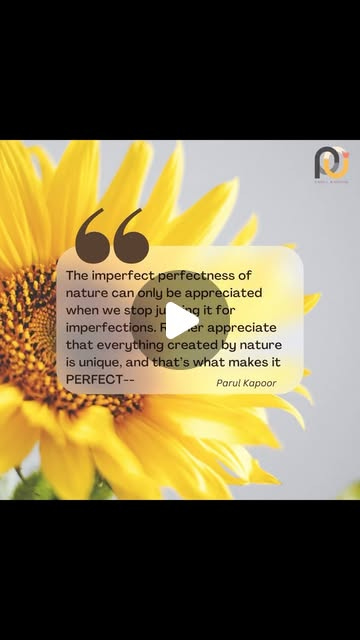
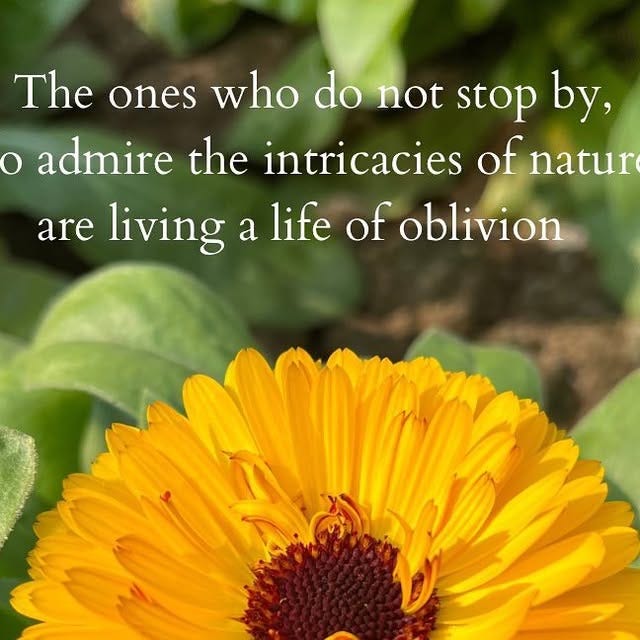
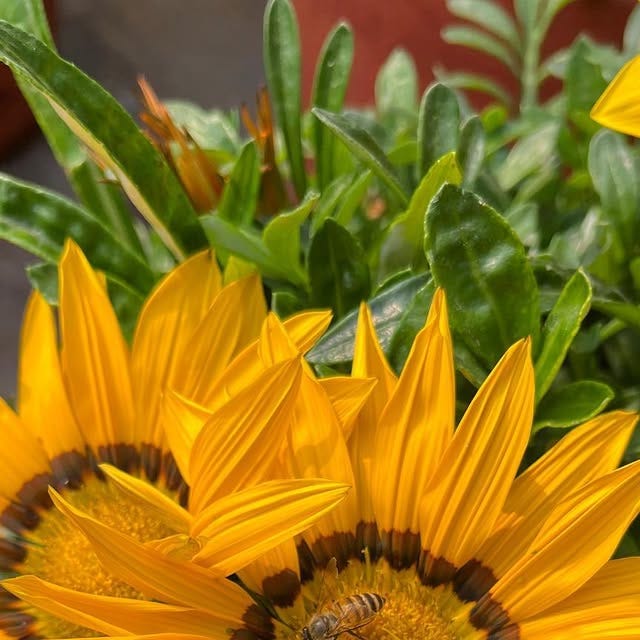
So much to learn from nature, indeed 💚
@Kanchan Balani a fellow Dilli NCR Substacker who is reading that tree book :D